Encrypted messages can appear on a lock screen because encryption and notification displays solve entirely different problems.
Android Notification Privacy in 2026: How to Hide Message Previews and Protect Encrypted Chats
End-to-end encryption protects message content while it travels between participants, but it cannot stop Android, a connected wearable, or a nearby person from displaying or seeing a preview after delivery. To hide message previews on Android in 2026, you must disable sensitive lock-screen content, review notification settings for each private messaging app, and check every linked device.
Key Takeaways for Encrypted Chat Lock Screen Privacy
- End-to-end encryption does not hide delivered notifications. It protects messages in transit and from the messaging service, not from someone looking at an unlocked phone or a visible lock screen.
- Android notification controls vary by version, manufacturer, and app. Check both your system settings and the private messaging notification settings within the app itself.
- Android 16 can redact certain sensitive notifications. This includes some one-time passcodes in high-risk situations, though it does not mean it automatically hides every private message.
- Wearables create another preview surface. A hidden phone notification may still appear on a watch unless its settings are changed separately.
- Notification privacy involves a trade-off. Removing previews reduces glanceable information but does not prevent every form of local access.
Why can encrypted messages still appear on an Android lock screen?
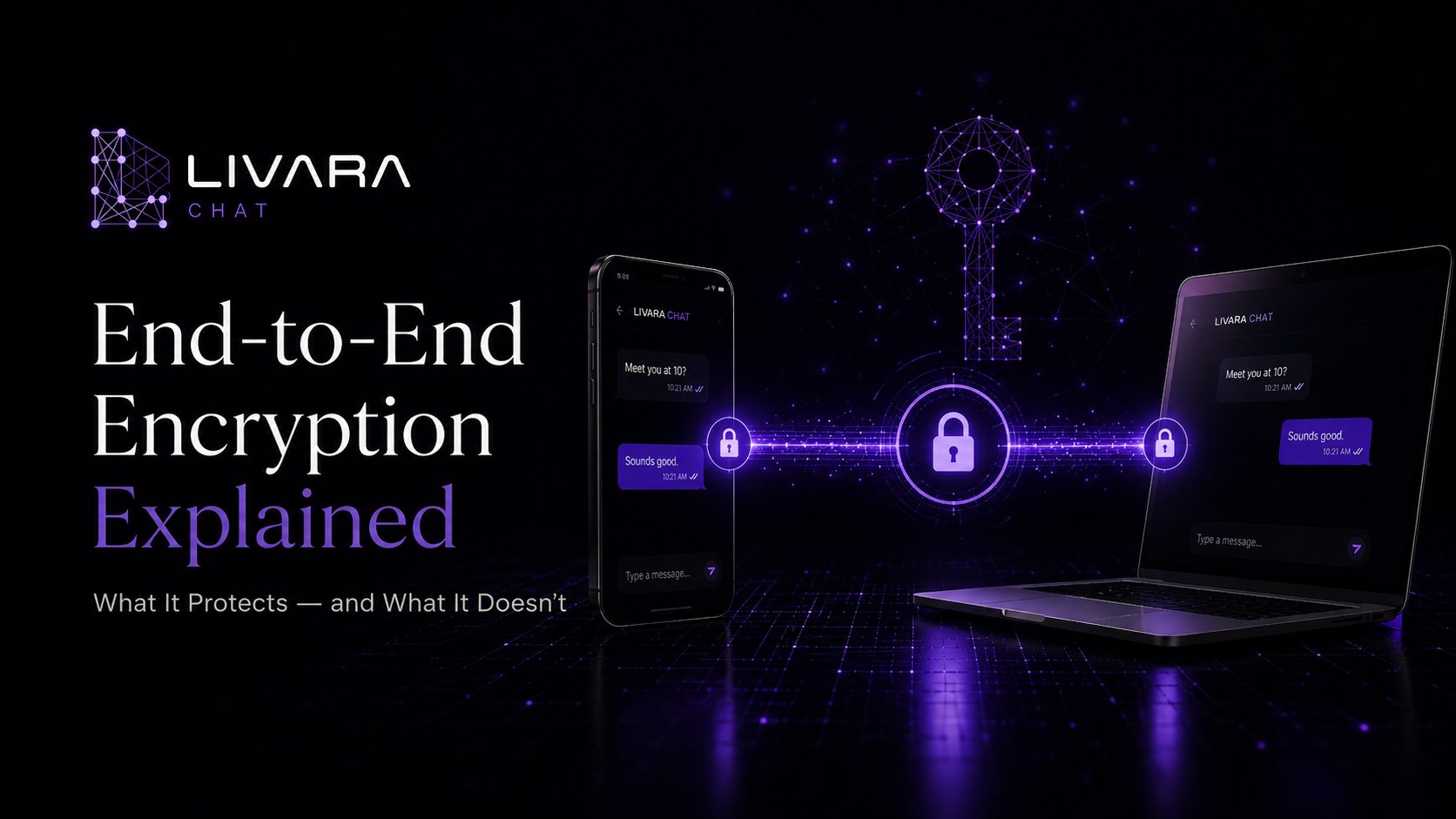
Encrypted messages can appear on a lock screen because encryption and notification displays solve entirely different problems. End-to-end encryption (E2EE) ensures message content is encrypted so that only the communicating participants’ devices can read it during normal delivery.
Once a recipient’s device decrypts a message, the messaging app may pass some content to Android’s notification system. Android can then display the sender, message text, or both on the lock screen, notification shade, pop-up banner, connected watch, or another linked surface.
This distinction is vital: encrypted chat lock screen privacy is a device configuration issue after delivery, not proof that encryption has failed.
| Stage | What protects the message | What can still expose content |
|---|---|---|
| Message sent | End-to-end encryption | A compromised sender or unlocked sender device |
| Message in transit | Encrypted transport and E2EE | Information not covered by the app’s encryption design |
| Message delivered | Device lock and app controls | Lock-screen previews, banners, and notification history |
| Message mirrored | Wearable or linked-device controls | Watch screens, car displays, and desktop notifications |
| Message opened | Screen lock and physical privacy | Shoulder surfing, screenshots, and an unlocked device |
A notification preview is the visible text, sender information, or media summary shown before the user opens the app. Anyone within sight may read it without breaking encryption.
How to hide message previews on Android in 2026
To stop notifications showing message content, open Android’s notification settings and hide sensitive content on the lock screen. Menu names differ across Android versions and phone manufacturers, so use the Settings search box for terms such as “lock screen notifications”, “sensitive notifications”, or “notification content”.
A practical setup sequence is:
- Open Settings.
- Select Notifications or search for lock screen notifications.
- Open the lock-screen notification controls.
- Choose an option that hides sensitive content, shows notifications without content, or suppresses lock-screen notifications entirely.
- Return to App notifications.
- Select each messaging app and review its notification categories.
- Open the messaging app and check its own privacy and notification settings.
- Lock the phone and send a test message from another account or device.
Some phones offer choices such as showing all notification content, hiding sensitive content, or showing no notifications. The labels and behaviours are not perfectly consistent across all devices.
Which private messaging notification settings should I choose?
The right setting depends on where the phone is used and what information must remain private.
| Setting | Convenience | Exposure Risk | Suitable Use Case |
|---|---|---|---|
| Full sender and message preview | High | High | Low-sensitivity messages on a closely controlled device |
| Sender only | Medium | Medium | Users who need to identify the conversation without reading content |
| Generic “new message” alert | Medium | Lower | Private conversations where the alert still matters |
| No lock-screen notification | Low | Lowest on lock screen | Shared spaces, travel, or sensitive work |
| Notifications disabled | Lowest | Lowest from that app | Conversations where delayed awareness is acceptable |
These choices reduce visible previews; they do not protect content after the phone is unlocked or against malicious software with sufficient access. A strong passcode, prompt locking, and current security updates remain strictly necessary.
Does Android 16 automatically protect sensitive notifications?
Android 16 can automatically redact some sensitive notification content, particularly notifications containing one-time passcodes, in high-risk scenarios. According to Android Authority, this builds on Android 15 protections that restrict untrusted apps from reading certain sensitive data.
A one-time passcode (OTP) is a temporary code used to confirm a login or transaction. Android’s automatic treatment of some OTP notifications should not be interpreted as universal protection for chat messages, medical details, financial conversations, or personal photos.
Reporting during Android 16’s development also described work on removing previously viewed notifications from the lock screen. How-To Geek covered that prospective feature in February 2025. Development reporting does not guarantee identical availability on every released device, because manufacturers, software builds, and regional roll-outs can differ.
A separate SwitchToAndroid overview describes Android 16 privacy controls, including a category for managing which apps can share on-screen content with AI features. Users should verify options on their own devices rather than assuming every Android 16 phone exposes the identical controls.
Can a smartwatch or linked device reveal a hidden message?
Yes. A smartwatch, car display, tablet, or desktop companion can show a message even when the phone’s lock screen successfully hides its content. Each linked device has its own notification rules, authentication state, and display behaviour.
A linked device is a separate device authorised to receive or mirror account activity. Review all connected surfaces thoroughly:
- Open the wearable app and inspect notification mirroring.
- Disable message previews on the watch face or watch lock screen.
- Require a watch PIN where supported.
- Check Android Auto or other in-car notification settings.
- Review tablets, browsers, and desktop sessions linked to the messaging account.
- Remove devices that are lost, sold, shared, or no longer used.
- Test notifications while each device is explicitly locked.
Mirroring controls may suppress alerts without ending an authorised messaging session. Use the messaging app’s linked-device or session-management screen to revoke access entirely where available.
Where can a delivered notification leak?
Encrypted message delivered
            |
            v
      Recipient’s phone
       /      |       \
      v       v        v
Lock screen  Banner  Notification shade
      |
      v
Wearable / car / linked display
      |
      v
Nearby person, camera, or unlocked-device user
This chart describes visibility after delivery. It does not mean every device uses each path, or that every messaging app includes message text in notifications.
What data-leak news should Android users watch this week?
Do not rely on an undated “leaks this week” list for critical security decisions. Incident details change, early reports may be incomplete, and supplied research often covers Android privacy features rather than verified breaches from the current week.
For current risk information, always check primary sources:
| Source to Monitor | What to Look For | Action to Take |
|---|---|---|
| Phone manufacturer’s security page | Device-specific advisories and update availability | Install supported updates immediately |
| Android Security Bulletins | Published Android vulnerabilities and patch information | Check the device’s security patch level |
| Messaging provider’s official status page | Confirmed incidents affecting the service | Follow the provider’s stated remediation steps |
| Employer or school security team | Managed-device alerts and required changes | Apply approved configuration |
| National cyber-security authority | Active campaigns and public guidance | Verify alerts before acting |
Treat unsolicited breach warnings with absolute caution. Do not open login links from alarming messages; navigate to the service through its official app or a known address. Notification hiding limits visual exposure, but it cannot remedy a breached account, stolen session, or compromised device.
Frequently Asked Questions (FAQ)
Does end-to-end encryption hide Android notification previews?
No. End-to-end encryption protects message content during delivery so that normal access is limited to conversation participants’ devices. After a device decrypts the message, the app may send preview text to Android’s notification system. Lock-screen, wearable, and linked-device controls must therefore be configured separately.
How can I stop notifications showing message content but keep alerts?
Choose a lock-screen option that hides sensitive content, then configure the private messaging notification settings to show a generic alert such as “new message”. Exact labels depend on the phone, Android build, and app. Test the result while the device is locked because a settings description may not reveal every display surface.
Will Android 16 hide every private notification automatically?
No. Android 16 includes automatic redaction for certain sensitive notifications, particularly some one-time passcodes in high-risk situations, but that is not blanket protection for all messages. Users must still review lock-screen, per-app, wearable, and linked-device settings to control ordinary chat previews.
Are Livara Chat messages protected if previews are enabled?
Livara Chat (chat.livara.org) provides end-to-end client-side hybrid encryption (utilising ML-KEM-768 and P-256) for web and Android direct messages, alongside persistent Socket.IO delivery. However, encryption cannot prevent a recipient’s device, browser, wearable, or nearby person from revealing content displayed after delivery. Livara draws explicit trust boundaries but does not claim that encryption overrides Android notification settings. Hide previews and secure every linked device to reduce local exposure.
What is the safest lock-screen setting for private chats?
Showing no message content on the lock screen provides stronger visual privacy than displaying sender names or full previews. It still cannot protect an unlocked device, compromised software, or another authorised session. Choose generic alerts or disable lock-screen notifications entirely, then test the phone, watch, and linked devices yourself.