A compromised server cannot leak passwords it mathematically never received. The server remains a zero-trust environment; its compromise does not equate to user compromise.
A zero knowledge password proof allows a client device to prove to a server that it knows a secret without ever transmitting the secret itself. In secure messaging, this shift from sending hashed credentials to utilising Secure Remote Password (SRP) protocols ensures that a compromised server cannot leak passwords it mathematically never received.
Key takeaways
- Traditional authentication transmits passwords across networks, leaving them vulnerable to interception and server-side database breaches.
- An SRP authentication messenger uses advanced cryptography to verify your identity locally, eliminating the need to transmit sensitive credentials.
- Because the server never stores password-equivalent data, server breaches yield nothing an attacker can use to forge a login.
- Livara combines SRP authentication with verified hybrid post-quantum end-to-end encryption to secure private direct and group conversations from end to end.
What makes a zero knowledge password proof necessary?
Every major password breach follows a tedious, catastrophic script: attackers compromise a server, dump the password database, and crack the stored hashes offline. As detailed by security researchers in the DEV Community, the 2012 LinkedIn breach exposed 117 million SHA-1 hashes, whilst the 2022 LastPass incident resulted in the exfiltration of encrypted user vaults. The root vulnerability remains identical across a decade of failures: the server held enough data to verify the password, which meant it held enough data to be cracked.
In standard password authentication, the client sends the password over a Transport Layer Security (TLS) connection. The server hashes it, compares it to a stored hash, and grants access. This model means the password traverses the network and exists in the server's memory, however briefly. A compromised TLS session, a logging misconfiguration, or a server-side memory exploit can expose the credential.
Security demands a structural solution, not merely a stronger hashing algorithm. Implementing a zero knowledge password proof severs this vulnerability entirely. The client proves knowledge of the password mathematically, meaning no credential ever traverses the wire, and no hash sits waiting to be stolen.
How does an SRP authentication messenger actually work?
The Secure Remote Password (SRP) protocol, formalised in the Internet Engineering Task Force's RFC 2945, is an augmented password-authenticated key exchange (PAKE) protocol. Originally designed to navigate around restrictive cryptography patents, it has become the gold standard for secure, trustless login mechanisms.
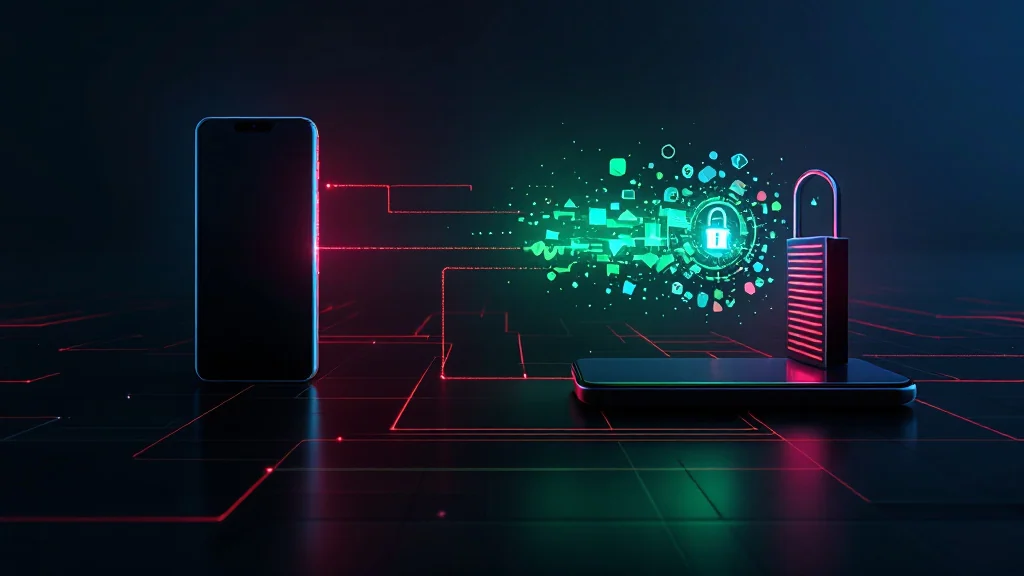
In an SRP authentication messenger, the client and server engage in a cryptographic exchange. The server stores a mathematically derived 'verifier' rather than a password hash. When you log in, your device uses your password to generate a single-use cryptographic proof. The server applies its verifier to this proof. If the maths aligns, the server knows you possess the password.
| Feature | Traditional Password Hash | SRP Authentication |
|---|---|---|
| Data Transmitted | Plaintext password (over TLS) | Mathematical zero-knowledge proof |
| Data Stored on Server | Password hash | Cryptographic verifier |
| Server Breach Impact | Hashes can be cracked offline | Verifiers cannot be used to log in |
| Network Interception | Exposes credential if TLS fails | Exposes useless, single-use math |
Because of its zero-knowledge properties, a man-in-the-middle attacker observing the exchange cannot obtain enough information to guess the password. They capture only a mathematical assertion that is useless for subsequent login attempts.
Why is secure login cryptography resistant to server breaches?
The defining advantage of an augmented PAKE protocol is its resistance to offline dictionary attacks following a database compromise. Wikipedia's summary of the SRP standard notes explicitly that the server does not store password-equivalent data.
If attackers breach a traditional server, they steal password hashes. They can then take those hashes offline and run automated guessing algorithms against them at a rate of billions of attempts per second. If they breach a server utilising secure login cryptography via SRP, they steal only the verifiers.
A verifier is not password-equivalent. An attacker cannot submit a stolen verifier to the server to authenticate as you. Furthermore, deriving the original password from the verifier requires solving the discrete logarithm problem, a mathematical hurdle that modern cryptographic standards render computationally infeasible. The server remains a zero-trust environment; its compromise does not equate to user compromise.
How does Livara integrate a zero knowledge protocol chat?
Livara employs a strict zero-knowledge architecture. Authentication relies on the SRP protocol, ensuring zero password transmission over the wire. This secures the perimeter, ensuring only you can access your account, which is the foundational step before message encryption begins.
Once authenticated, Livara protects your conversations using a verified hybrid post-quantum end-to-end encryption stack. Direct messages use the LVR1 protocol, whilst private groups (up to six people) use LGS1. Both protocols run a double ratchet: a standard ECDH P-256 ratchet alongside a post-quantum ML-KEM-768 epoch ratchet (adhering to NIST's FIPS 203 standard). Every message key is derived from both, providing robust post-compromise security.
However, a zero knowledge protocol chat only protects private conversations. It is vital to understand what end-to-end encryption does and does not protect. On Livara, public channels are broadcast streams—one author publishing to an unbounded audience. They are deliberately public and unencrypted by design. This architectural boundary allows Livara to act on reports and remove abusive material from public broadcasting surfaces, whilst keeping your direct and group messages mathematically sealed.
What data remains visible when the password is hidden?
Securing the login via SRP and sealing the message contents via AES-256-GCM encryption solves two distinct problems, but neither eliminates metadata.
Even in a highly secure environment, understanding what messaging metadata reveals is essential. Standard routing metadata—such as the sender's identity, the destination, and delivery timestamps—must be stored briefly by the server to facilitate real-time device synchronisation and message delivery. While a zero-knowledge authentication system ensures the server cannot read your messages or steal your password, the server still knows that a connection occurred.
Frequently asked questions
What is a zero-knowledge proof in simple terms?
It is a cryptographic method allowing one party to prove to another that a statement is true without revealing any information beyond the validity of the statement itself. In secure messaging, it allows your device to prove it knows your password without ever revealing the actual password to the server.
Does an SRP authentication messenger protect against keyloggers?
No. SRP secures the network transmission and protects the server database from offline cracking. If a keylogger or malware infects your physical device, it captures your keystrokes before the zero-knowledge protocol even begins its mathematical calculations.
How does Livara handle forgotten passwords under SRP?
Because Livara never receives your password, it cannot reset it for you. Account recovery instead relies on encrypted key recovery (v7), which seals your cryptographic identity under a distinct 256-bit recovery key derived locally from your physical recovery phrase.