If the platform cannot read the data, it cannot give it to the police. The dividing line between metadata extraction and content surrender is mathematically rigid.
When law enforcement serves a messaging app subpoena, the extracted data depends entirely on the platform's underlying cryptographic architecture rather than the wording of the warrant. For platforms with full end-to-end encryption (E2EE) by default, authorities retrieve only routing metadata—such as account creation dates and connection timestamps—because the provider possesses zero message content. Conversely, unencrypted broadcast channels or legacy cloud-based chats yield full conversation histories, media files, and contact lists upon legal demand.
Key takeaways
- A messaging app subpoena can only extract data the provider actually retains on its servers.
- End-to-end encryption mathematically prevents providers from handing over message content during E2EE warrant compliance.
- Law enforcement chat metadata usually includes sender, destination, and delivery timestamps, which authorities use to map communication networks.
- Public broadcast channels are structurally unencrypted by design on verified platforms, allowing both moderation and full compliance with legal data requests.
- Cryptographic zero-knowledge proofs ensure that platforms never store or transmit user passwords, removing them entirely from the scope of a subpoena.
What does a messaging app subpoena actually extract?
A messaging app subpoena extracts exactly what the service provider retains on its central servers. If a platform encrypts messages end-to-end, courts and investigators receive only account registration details and basic connection logs, whereas cloud-centric applications must surrender full plaintext chat transcripts.
The dividing line is mathematically rigid. Signal's published government requests disclosures confirm that when forced to comply with United States grand jury subpoenas, the organisation can only produce the date an account was created and the date it last connected to the service. They cannot extract messages because they do not hold the decryption keys. Similarly, NetSfere's published law enforcement case studies highlight that genuine device-to-device encryption using industry standards like AES-256 and Elliptic Curve Cryptography (ECC) ensures true data protection against server-side extraction. If the platform cannot read the data, it cannot give it to the police.
How does Telegram arrest encryption news change the landscape?
The recent Telegram arrest encryption headlines highlight the strict legal and technical dividing line between moderating public broadcast channels and securing private, sealed communications. When platform executives face legal pressure, authorities typically target unmoderated public spaces rather than mathematically sealed direct messages.
This distinction dictates how secure platforms are built. On Livara, channels are public broadcast streams, by design and on purpose. A channel is a broadcast surface—one author publishing to an unbounded audience—not a private conversation. It is deliberately public and unencrypted so that Livara can act on reports, remove abusive material, and ban channels hosting illegal content. Conversely, private conversations rely on full end-to-end encryption. Direct messages utilise the LVR1 protocol, whilst private groups (2–6 people) use the LGS1 protocol, sealing every sender key inside pairwise LVR1 envelopes. Understanding what end-to-end encryption does and does not protect is essential for evaluating these architectural boundaries.
What law enforcement chat metadata is exposed during E2EE warrant compliance?
During E2EE warrant compliance, law enforcement chat metadata typically exposes the routing information necessary to deliver messages, such as timestamps, device identifiers, and sender-receiver relationships. Metadata is the data about your communication, rather than the content of the communication itself.
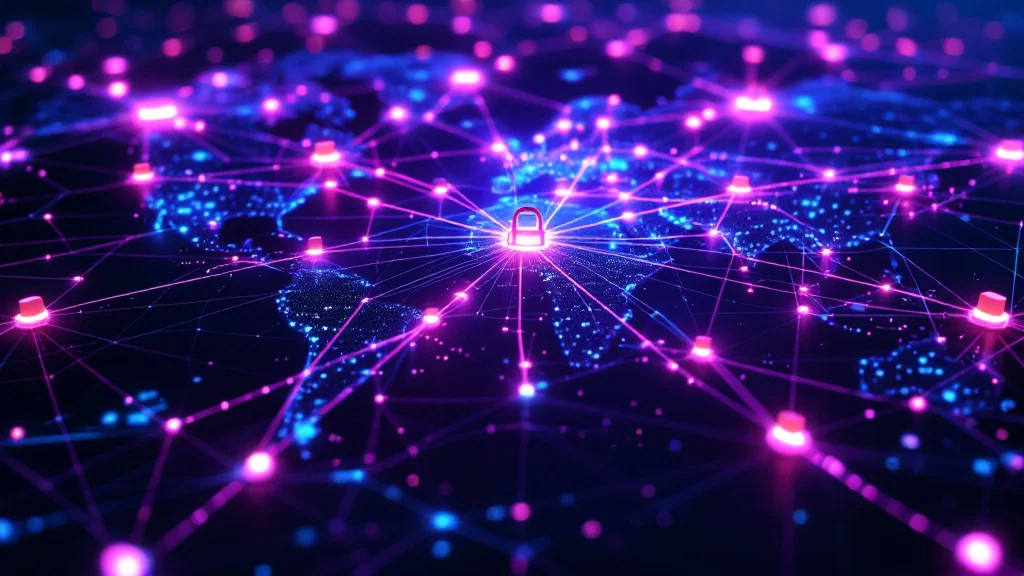
Private messengers must retain some routing metadata to function. Livara stores standard routing metadata—sender, destination, and delivery timestamps—specifically for real-time device synchronisation. While Session's core design documentation touts onion-routing to avoid metadata collection entirely, most standard encrypted messengers rely on server-side routing logs to ensure offline messages reach your device once it reconnects. Investigators use this data to establish that two individuals communicated at a specific time, even if the message content remains locked behind AES-256-GCM encryption. For a deeper look at network visibility, review exactly what metadata still reveals about user behaviour.
How do robust platforms handle private messenger data retention?
Secure platforms minimise private messenger data retention by structuring their architecture so that sensitive user data simply never touches the server in a readable format. By implementing zero-knowledge authentication and strict forward secrecy, providers drastically reduce the surface area available to legal discovery.
Livara achieves this through verifiable, transparent cryptography. Passwords are never transmitted over the wire; instead, the platform uses SRP (Secure Remote Password), a zero-knowledge proof that verifies password knowledge without revealing the password itself. Direct messages run a hybrid post-quantum double ratchet, combining a P-256 ECDH ratchet with an ML-KEM-768 epoch ratchet (standardised as NIST's FIPS 203). Because every message key is derived from both, the protocol provides forward secrecy—ensuring that even if a future key is compromised or seized, past messages cannot be decrypted. You can verify these mechanisms directly in Livara's published security boundaries.
What recent leaked data news puts user data in danger?
Recent leaked data news consistently demonstrates that platforms holding central decryption keys remain highly vulnerable to both state-backed data extraction and malicious corporate breaches. When an application lacks robust end-to-end encryption for group chats or media attachments, those assets become instant liabilities during a server compromise.
Modern threat models require assuming the server will eventually be breached or legally compelled. Over the past year, data dumps from legacy applications have exposed millions of private group conversations and shared files because they were only encrypted in transit, not at rest. Livara mitigates this specific danger: every image, video, file, and caption uploaded to a private chat receives a fresh random 32-byte content key and is encrypted before upload. The key travels securely inside the LVR1 or LGS1 envelope. Call media, including voice and video rooms, is similarly secured using WebRTC DTLS-SRTP. To understand exactly who sees what under various extraction scenarios, consult the Livara threat model.
Frequently asked questions
Can police read end-to-end encrypted messages?
No. If an application uses genuine end-to-end encryption, the service provider does not possess the decryption keys. Consequently, they cannot read the message content, nor can they provide that content to law enforcement, even when served with a valid search warrant or subpoena.
Do messaging apps hand over passwords to law enforcement?
Secure messaging apps cannot hand over passwords if they utilise zero-knowledge authentication. Protocols like SRP (Secure Remote Password) allow the server to verify your identity without ever receiving, transmitting, or storing your actual plaintext password, rendering it immune to server-side extraction.
What is the difference between a channel and a private group?
A private group is a sealed conversation where all text, media, and files are end-to-end encrypted. A channel is a public broadcast surface designed for one author to reach an unbounded audience. Channels are deliberately unencrypted to allow platform moderation and abuse prevention.
Does post-quantum encryption prevent subpoena data extraction?
Post-quantum encryption, such as ML-KEM-768, protects intercepted data from being decrypted by future quantum computers. While it secures data against "harvest now, decrypt later" attacks, it does not change the nature of a subpoena, which simply targets whatever data the provider currently retains.