Livara Chat does not wait for industry consensus; it actively deploys ML-KEM-768 secure messaging across all private conversations today.
The US National Institute of Standards and Technology (NIST) has finalised FIPS 203, standardising the cryptographic algorithms required to secure digital communications against quantum computers. While incumbent platforms delay their FIPS 203 implementation to protect legacy architectures, Livara Chat already deploys a hybrid post-quantum protocol. By running a traditional elliptic curve alongside ML-KEM-768, Livara exposes the lethargy of legacy messaging apps and sets a definitive benchmark for modern data protection.
Key takeaways
- NIST’s FIPS 203 standard establishes ML-KEM-768 as the primary defence against quantum decryption.
- State-sponsored threat actors actively harvest encrypted data from legacy messengers today to decrypt when quantum hardware matures.
- Livara Chat protects all direct and group messages by default using a hybrid post-quantum double ratchet, blending P-256 ECDH with ML-KEM-768.
- Public broadcast channels on Livara remain intentionally unencrypted and server-readable to allow content moderation.
What does the FIPS 203 implementation mean for secure messaging?
NIST's publication of the Module-Lattice-Based Key-Encapsulation Mechanism Standard (FIPS 203) fundamentally changes how applications must secure data in transit. FIPS 203 formalises ML-KEM (formerly CRYSTALS-Kyber) as the approved algorithm for establishing secure keys over a public channel. This standardisation means the technology is no longer experimental; it is the mandated cryptographic baseline for resisting quantum attacks.
In practical terms, this addresses the 'harvest now, decrypt later' threat. Current encryption standards, such as RSA and elliptic curve cryptography (ECC), rely on mathematical problems that a sufficiently powerful quantum computer will easily solve using Shor’s algorithm. Adversaries currently siphon intercepted network traffic and store these encrypted data blobs. Once quantum computing matures, they will retrospectively decrypt this archived communication. A rapid FIPS 203 implementation is the only way to sever this vulnerability, ensuring that ciphertexts captured today remain computationally impenetrable tomorrow.
Why are legacy messengers struggling to upgrade chat encryption?
Legacy messaging platforms carry enormous architectural debt, making it highly difficult for them to rapidly upgrade chat encryption. When threat actors breach transport layers, any data secured by outdated key agreement protocols is jeopardised.
Incumbent apps hesitate because integrating post-quantum algorithms increases computational overhead and bandwidth requirements. Post-quantum ciphertexts and public keys are significantly larger than their traditional ECC counterparts. For platforms that prioritise backward compatibility with decade-old smartphones or that rely on outdated protocol designs, forcing a transition risks breaking their infrastructure. Instead of overhauling their foundations, they patch existing systems or offer post-quantum security only as an opt-in feature for a fraction of users. Readers evaluating their current software should consult our secure messaging app checklist to determine if their provider has definitively committed to standardising post-quantum protections across all conversations.
How does Livara deploy ML-KEM-768 secure messaging today?
Livara Chat does not wait for industry consensus; it actively deploys ML-KEM-768 secure messaging across all private conversations. Livara uses a hybrid post-quantum double ratchet for direct messages (the LVR1 protocol). In this architecture, a standard P-256 ECDH ratchet and a post-quantum ML-KEM-768 epoch ratchet run side by side. Every single message key is derived from both algorithms via the HKDF-SHA-256 key derivation function.
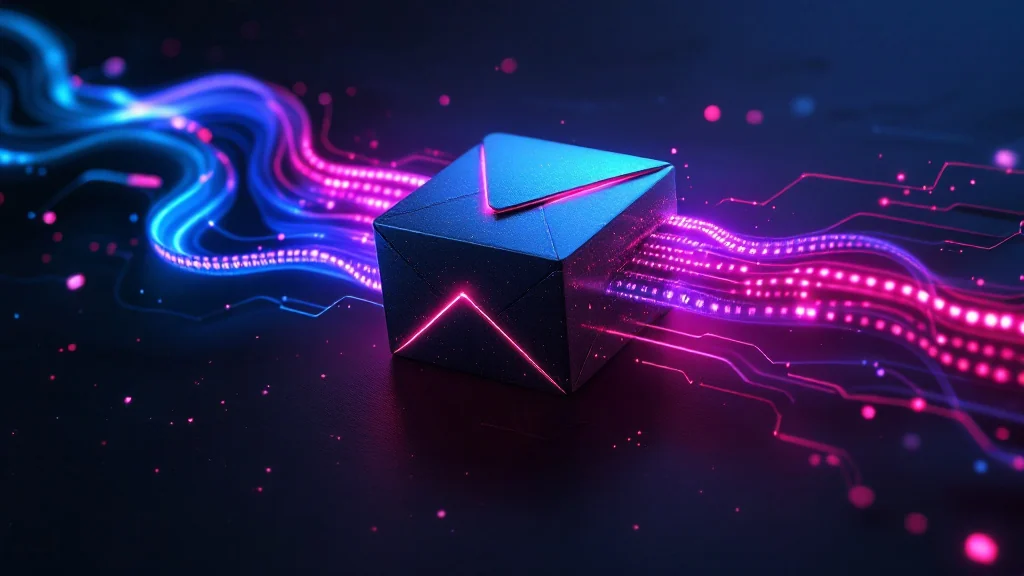
This hybrid approach guarantees that encryption remains robust even if an adversary eventually finds an unforeseen mathematical flaw in the new lattice-based cryptography. Livara then encrypts the actual message payloads using AES-256-GCM, incorporating a 12-byte nonce and a 16-byte authentication tag. For private groups, while group membership is server-controlled, Livara relies on the LGS1 protocol to provide full sender-key end-to-end encryption for the messages themselves. Each sender key is sealed inside pairwise LVR1 envelopes, ensuring group texts, photos, and voice notes are thoroughly insulated by hybrid post-quantum encryption.
Openness matters. Livara publishes SHA-256 checksums that users can inspect locally and offline via the Proof Lab. Furthermore, user passwords never cross the wire; Livara utilises the Secure Remote Password (SRP) protocol for zero-knowledge authentication. It is vital to note the architectural boundary here: whilst direct and group chats are fully sealed, channels are public broadcast streams by design. Livara deliberately leaves public channels unencrypted and server-readable to allow network administrators to act on reports and remove abusive material.
What happens to user data before the NIST post quantum standards 2026 deadline?
Many enterprise vendors and government contractors point to the NIST post quantum standards 2026 adoption timelines as their target for compliance. However, data transmitted over legacy protocols between now and 2026 remains entirely exposed to interception and future decryption. If an application waits until 2026 to implement ML-KEM-768, three years of sensitive user communication will sit in adversarial databases awaiting a quantum breakthrough.
Users must also understand what cryptography does not hide. Even with a robust post-quantum encryption protocol in place, routing metadata—such as the sender's identity, the destination, and delivery timestamps—must still be stored temporarily to facilitate real-time device synchronisation. While the content of a Livara LVR1 or LGS1 message is mathematically opaque to everyone except the sender and recipient, understanding what metadata still reveals is essential for anyone operating under a strict threat model.
Frequently asked questions
What is FIPS 203?
FIPS 203 is the official standard published by NIST that specifies the Module-Lattice-Based Key-Encapsulation Mechanism (ML-KEM). It defines the cryptographic algorithms required to establish secure keys capable of resisting attacks from future quantum computers.
Does Livara encrypt public channels?
No. Channels are public broadcast streams by design. They are deliberately unencrypted and server-readable so that Livara can moderate content, act on user reports, and remove abusive material. Only direct messages and private group communications are end-to-end encrypted.
Why use hybrid encryption instead of just ML-KEM-768?
A hybrid protocol combines a proven traditional algorithm (P-256 ECDH) with a new post-quantum one (ML-KEM-768). This ensures that if researchers discover a fundamental flaw in the new post-quantum mathematics, your messages remain protected by the traditional elliptic curve encryption.
How does Livara protect my password?
Livara uses the Secure Remote Password (SRP) protocol. This is a zero-knowledge authentication method that verifies you know your password without ever transmitting the password itself over the network, ensuring it cannot be intercepted during login.