When privacy requires manual effort, most conversations remain in plaintext on company servers, waiting to be read, leaked, or handed over.
Opt-In Encryption Messengers
Apps like Telegram require users to manually activate 'Secret Chats' for each conversation. If you forget to toggle it, or if you create a multi-person group chat, your messages are stored on their servers in a readable format using only transport-layer security.
Livara (Always-On Default Encryption)
Livara applies hybrid post-quantum end-to-end encryption to every direct message (LVR1) and private group (LGS1) out of the box. There are no privacy toggles to manage, ensuring server operators cannot ever read your private conversations.
Opt-in encryption relies on human memory, which inevitably fails. A truly secure messenger must protect every private conversation by default, ensuring your data is never left exposed due to a forgotten setting.
When you download a messenger, privacy should not be a buried toggle. If you evaluate the top 10 secure messaging apps default encryption is the dividing line in any out of the box E2EE comparison between platforms built for real privacy and those built for data extraction. Livara operates as an always on encryption messenger, applying hybrid post-quantum end-to-end encryption to every private chat automatically so you never have to flip a switch.
Key takeaways
- Opt-in 'secret chats' leave the vast majority of users exposed because human memory fails.
- Livara's LVR1 protocol secures direct messages with a post-quantum double ratchet by default.
- Group chats in many popular apps lack end-to-end encryption entirely, whereas Livara protects private groups out of the box.
- Public broadcast channels on Livara are deliberately unencrypted to allow effective moderation of abusive material.
Why opt in vs default privacy messengers leave users exposed
Service providers often scan your messages for advertising or feature integration. When privacy requires manual effort, most conversations remain in plaintext on company servers, waiting to be read, leaked, or surrendered.
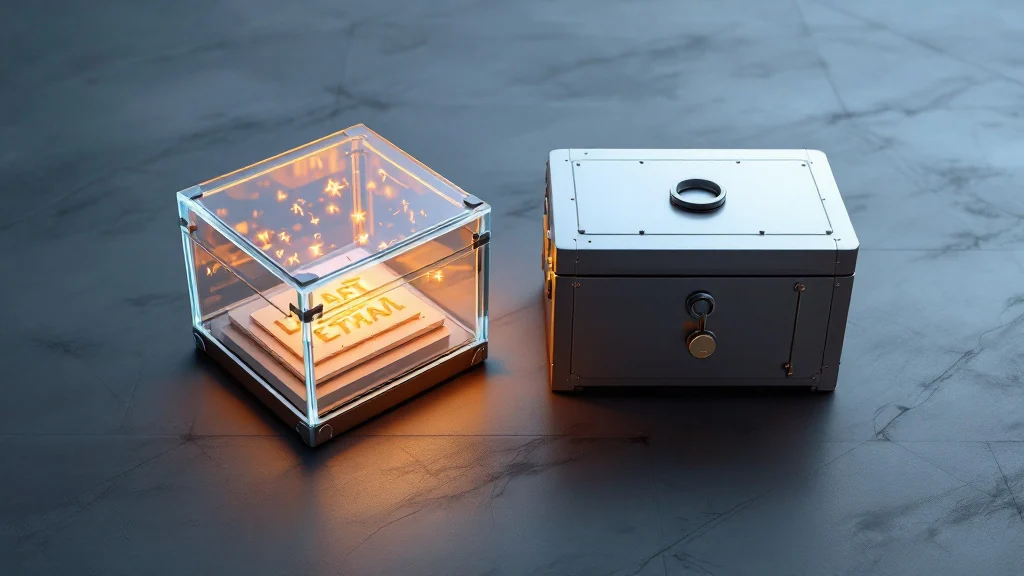
If an app asks you to switch on privacy, it holds the keys to your data until you do. Even when you remember the toggle, standard routing data—like who you messaged and when—is often still logged by the provider. To understand what metadata still reveals, you must look at how apps handle your underlying connections. Livara minimises this risk by authenticating your login without ever transmitting your password over the wire, using SRP (Secure Remote Password) zero-knowledge authentication. Furthermore, signature validation relies on ECDSA P-256 with SHA-256, ensuring that nobody can forge your cryptographic identity.
How secure chat apps without settings changes protect groups
Very few secure chat apps without settings changes extend their full cryptographic protection to multi-person group chats. Telegram offers zero end-to-end encryption for group conversations, whilst Livara wraps every group message in pairwise E2EE automatically. Note, however, that group membership itself remains server-controlled.
Protecting groups is computationally harder than protecting direct messages, causing many developers to compromise. Livara solves this seamlessly using the LGS1 protocol. It employs full sender-key end-to-end encryption, sealing each sender key inside pairwise LVR1 envelopes. Consequently, all text, edits, photos, videos, files, and voice notes in a private group are fully shielded from the server. Every media attachment receives a fresh random 32-byte content key and is encrypted before upload. That key then travels safely inside the LVR1/LGS1 envelopes, ensuring your group media is never exposed to the infrastructure routing it.
How an always on encryption messenger handles future threats
A truly always on encryption messenger anticipates the threat of adversaries harvesting encrypted data today to decrypt it tomorrow using advanced computers. Livara integrates post-quantum cryptography natively, rather than treating it as a distant future upgrade.
By running traditional elliptic curve cryptography alongside ML-KEM-768—formally standardised by the National Institute of Standards and Technology (NIST) as FIPS 203—Livara ensures robust forward secrecy and post-compromise security. For those curious about the specifics of post-quantum encryption in messaging, this hybrid approach guarantees that even if a future quantum computer breaks traditional algorithms, your current messages remain securely sealed. The cryptography is open for scrutiny. Users can inspect published SHA-256 checksums to check the APK yourself locally and offline via the Proof Lab, ensuring the app on your device matches the published secure code exactly.
Do encryption comparisons include public channels?
Most comparisons fail to distinguish between private chats and public broadcasting, expecting encryption to cover both indiscriminately. On Livara, channels are public broadcast streams, by design and on purpose, and they are never end-to-end encrypted.
A channel is a broadcast surface—one author publishing to an unbounded audience—not a private conversation. Livara leaves these deliberately unencrypted so the platform can act on user reports, remove illegal content, and ban channels hosting abusive material. Understanding what end-to-end encryption does and does not protect means recognising that E2EE belongs in private direct and group messages, whilst public broadcasts require active moderation. Never describe broadcast channel content as end-to-end encrypted; private conversations are fully sealed, whilst public channels are server-readable by design.
Frequently asked questions
What happens if I forget to turn on a secret chat?
If an app requires you to opt into a secret chat, failing to do so means your messages are transmitted with only basic transport-layer encryption. The service provider holds the decryption keys and can read, scan, or surrender your entire conversation history.
Are Livara group voice calls encrypted?
Yes. Call media for both direct and Android group rooms (accommodating two to six people) are encrypted using standard WebRTC DTLS-SRTP, meaning the call media is not post-quantum. The call signalling, known as LCS1, is carried securely as an ordinary pairwise-sealed message, keeping your communications strictly private.
Does Livara store my password on its servers?
No. Livara uses the Secure Remote Password (SRP) protocol for zero-knowledge authentication. This cryptographic proof authenticates that you know your password without ever transmitting the actual password over the internet, ensuring the server has no password data to steal or leak.